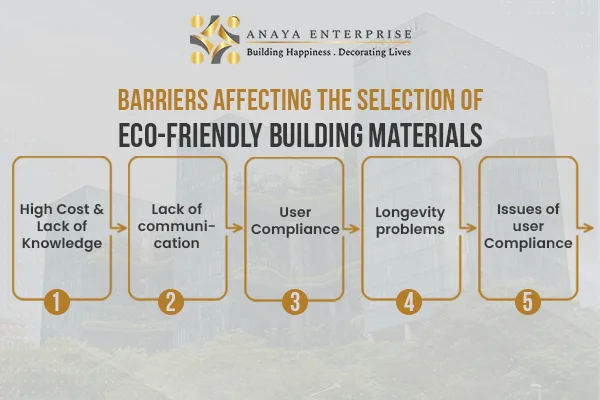
Using eco-friendly building materials can create problems in several ways. These include the right material selection, longevity, user compliance, etc. Choosing the sustainable material that balances quality as well as provides environmental concerns is not a cup of tea. Besides, replacing new materials in existing supply chains can also be difficult. Check out the section below to know the barriers that might hamper your dream project.
The foremost thing one should keep in mind is what eco-friendly building materials to use. Materials should be recyclable, biodegradable, and made from recycled sources. But selecting the standard materials within your budget can be difficult. Let’s take an example, many products might be good for the environment, but provide poor performance or a short life cycle. Hence, consult with a well-known designer first and then make the right decision.
A top challenge of using the environmentally friendly material is its life cycle. In most cases, these products do not last for a long time. Besides, industrial designers must cross-check other factors as well, including water & energy consumption, toxicity, as well as greenhouse gas emissions. So, choose the materials that provide a large life span and are consistent with the features required by the customers.
This is probably the biggest challenge designers might face while producing eco-friendly materials. For example, if a product is designed to be environmentally friendly, users often complain that the material does not achieve its mentioned benefits. For instance, if a material saves water or energy, it might not be effective if the user can’t use it properly or for a long time. Designers must study properly, use convenient materials, and balance environmental behavior. Besides, industrial designers can also create a feedback process and reward users to encourage more people to use eco-friendly materials.
Other big challenges industrial designers might face while making eco-friendly materials. Most of the environmental materials can be more expensive than the conventional alternatives, and create budget constraints for many projects. The high cost of the materials often deters people from investing their money in these projects. Insufficient knowledge about the materials might also be a possible reason to discourage people avoid using eco-friendly materials.
As you deal with eco-friendly materials, you are slated to get innovation in its finest form. You can get products which will not make any harmful impact on the environment. These products look valuable and they prove to be a meaningful addition in the lives of people who patronize them.
A top barrier when using environmentally friendly products is to communicate as well as educate users about the features and advantages of these products. Designers must clarify and convey to customers why they should use their products and how the materials made a positive impacts on customers’ lives. For instance, industrial designers can show video, audio demonstration, use storytelling, promote content highlighting the environmental facts on different social media platforms to inform people about their products and try to convert readers into their loyal and long-term customers.
Undoubtedly, eco-friendly building materials are the best choices to make the natural environment pollution-free and promote better health. However, insufficient knowledge, choosing the wrong materials, and a lack of customer communication might confuse you about the uses of these products. Hence, if you want to make your building with eco-friendly materials, first consult with top industrial designers and after listening to them, make a decision.
Purnima Villa, 2nd Floor, Rabindrabithi Bypass, Opp. Ananya Healthcare , Bolpur, Dist: Birbhum, PIN: 731204.